


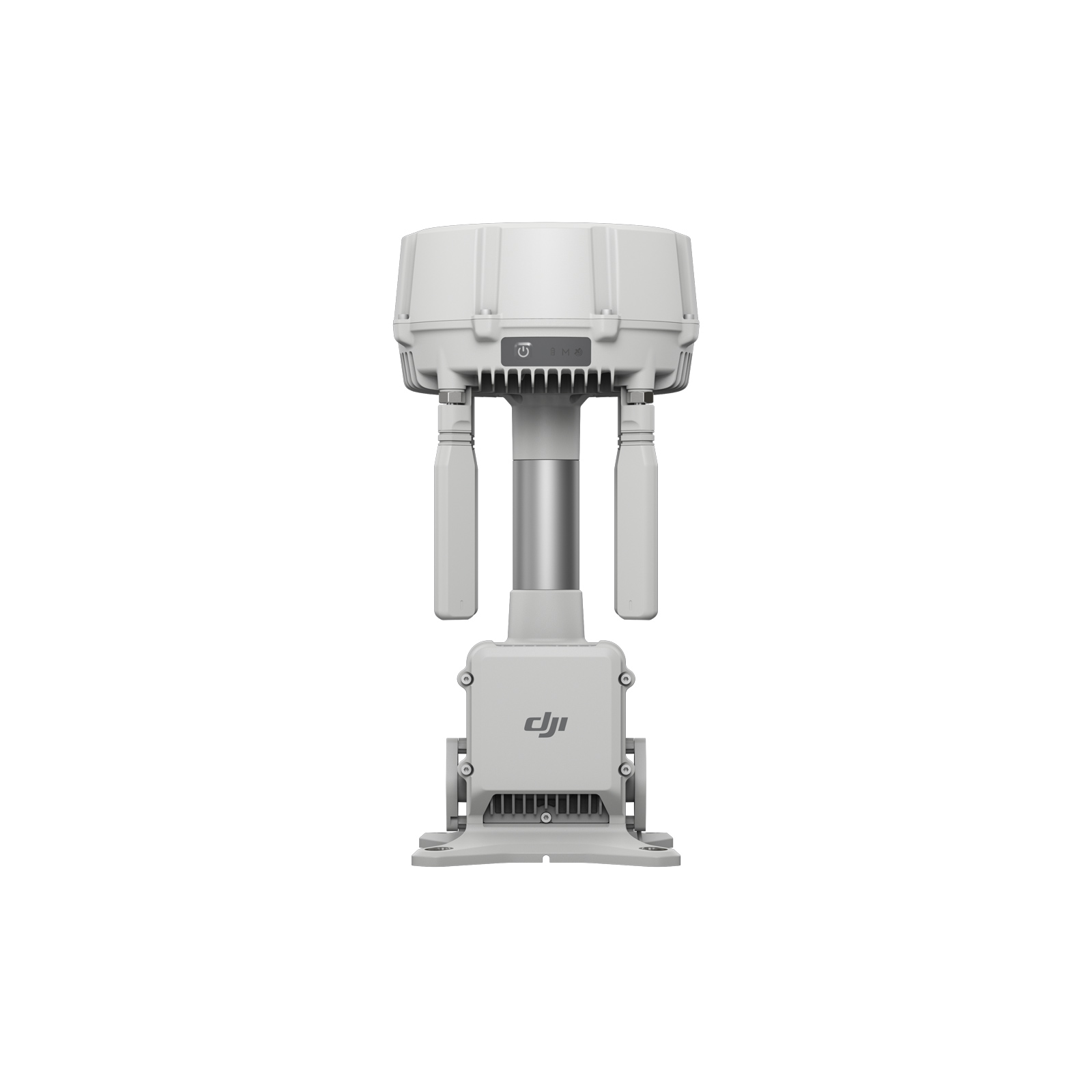
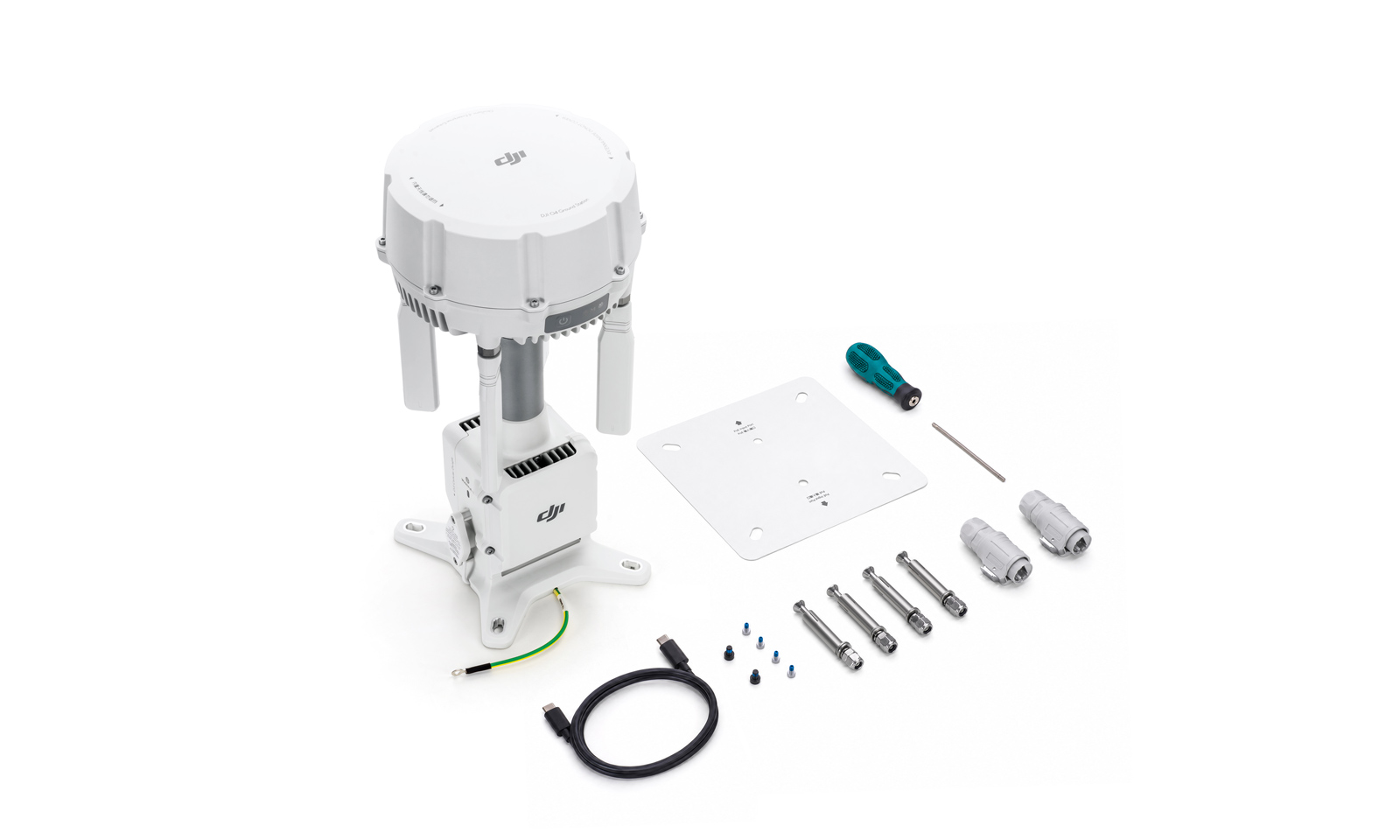
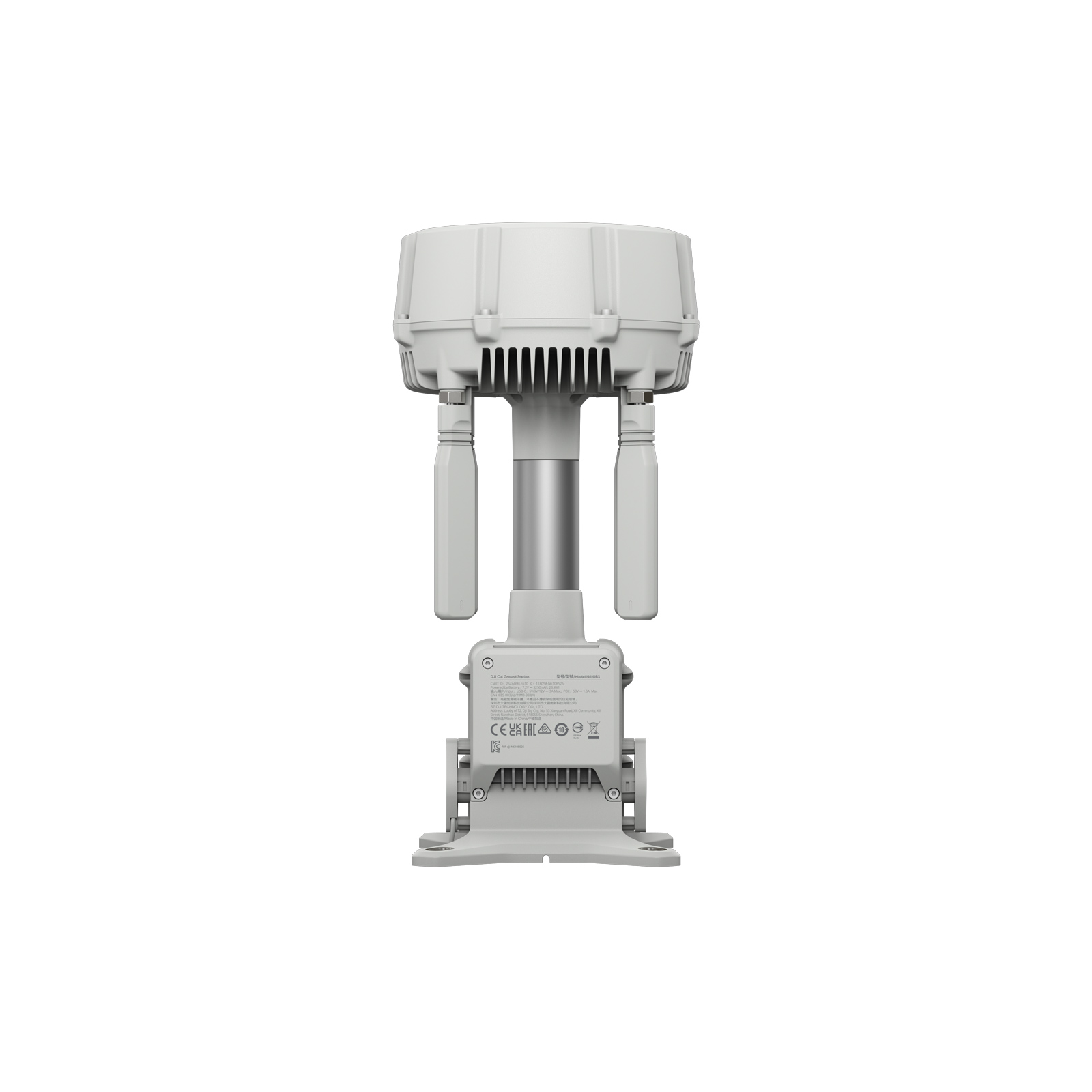
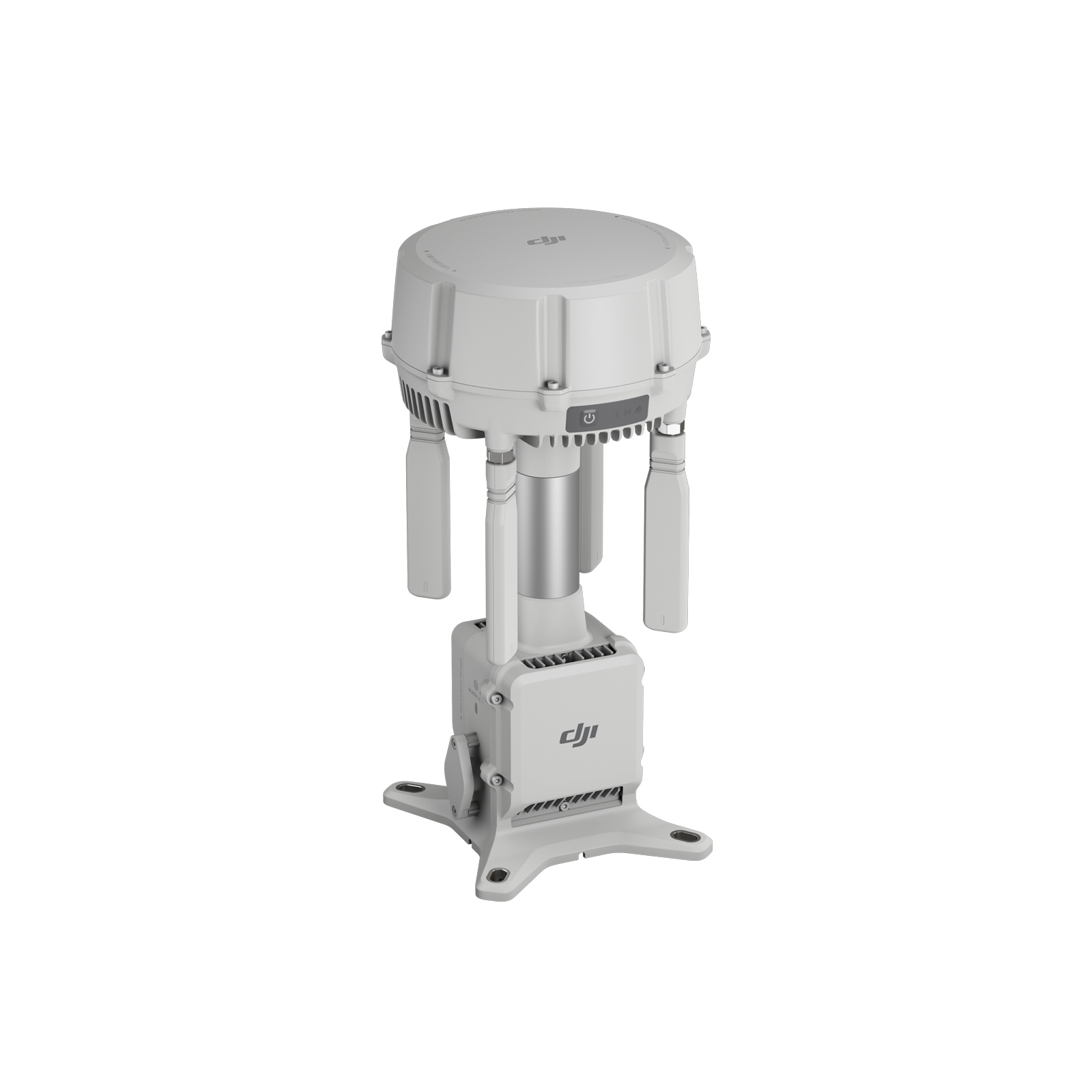
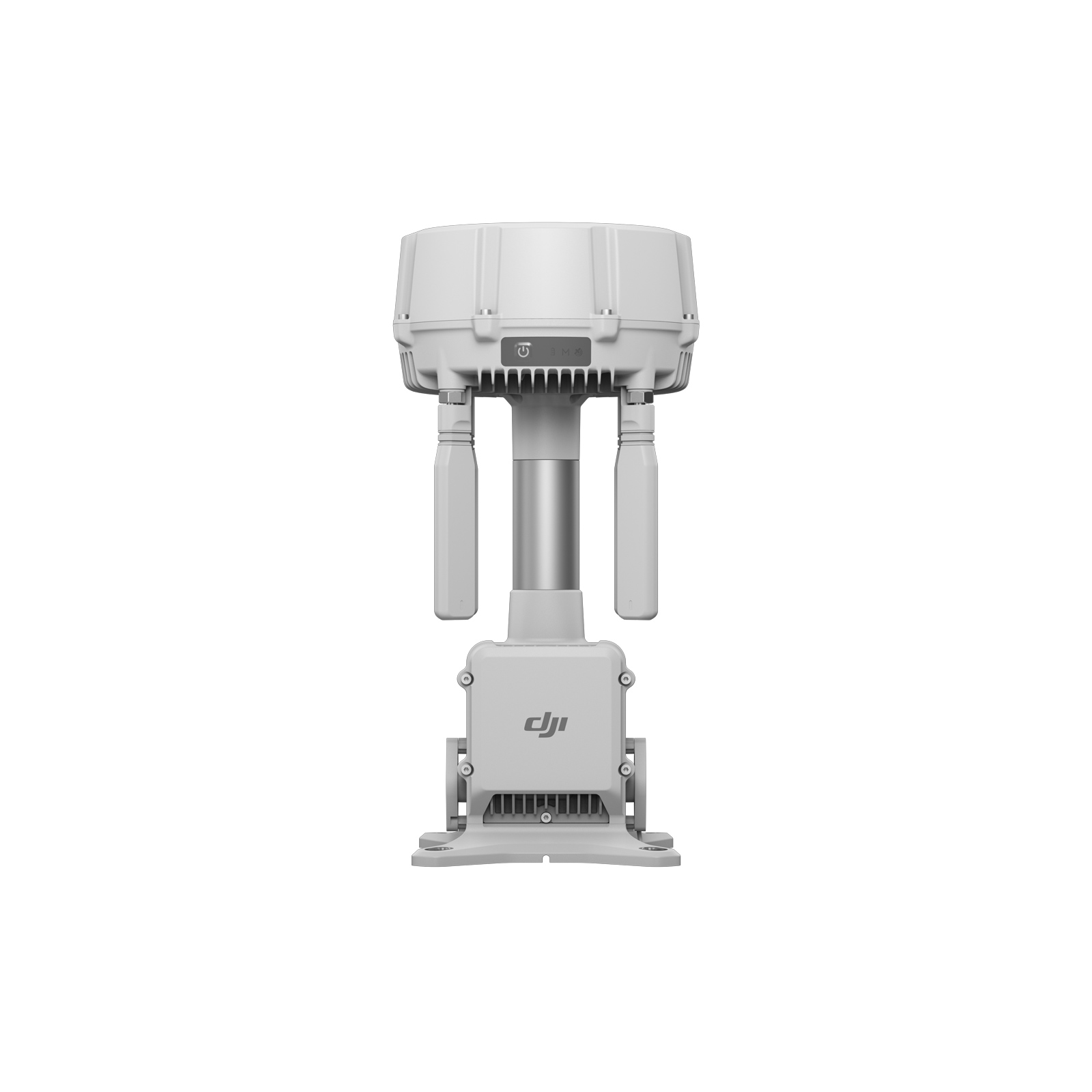
DJI O4 Ground Station
£1,880.00
- Long-range O4 video transmission
- Stable, low-latency HD monitoring
- Designed for DJI O4 systems
- Reliable control in complex environments
- Ideal for professional ground operations
DJI O4 Ground Station — Next-Generation Transmission Hub
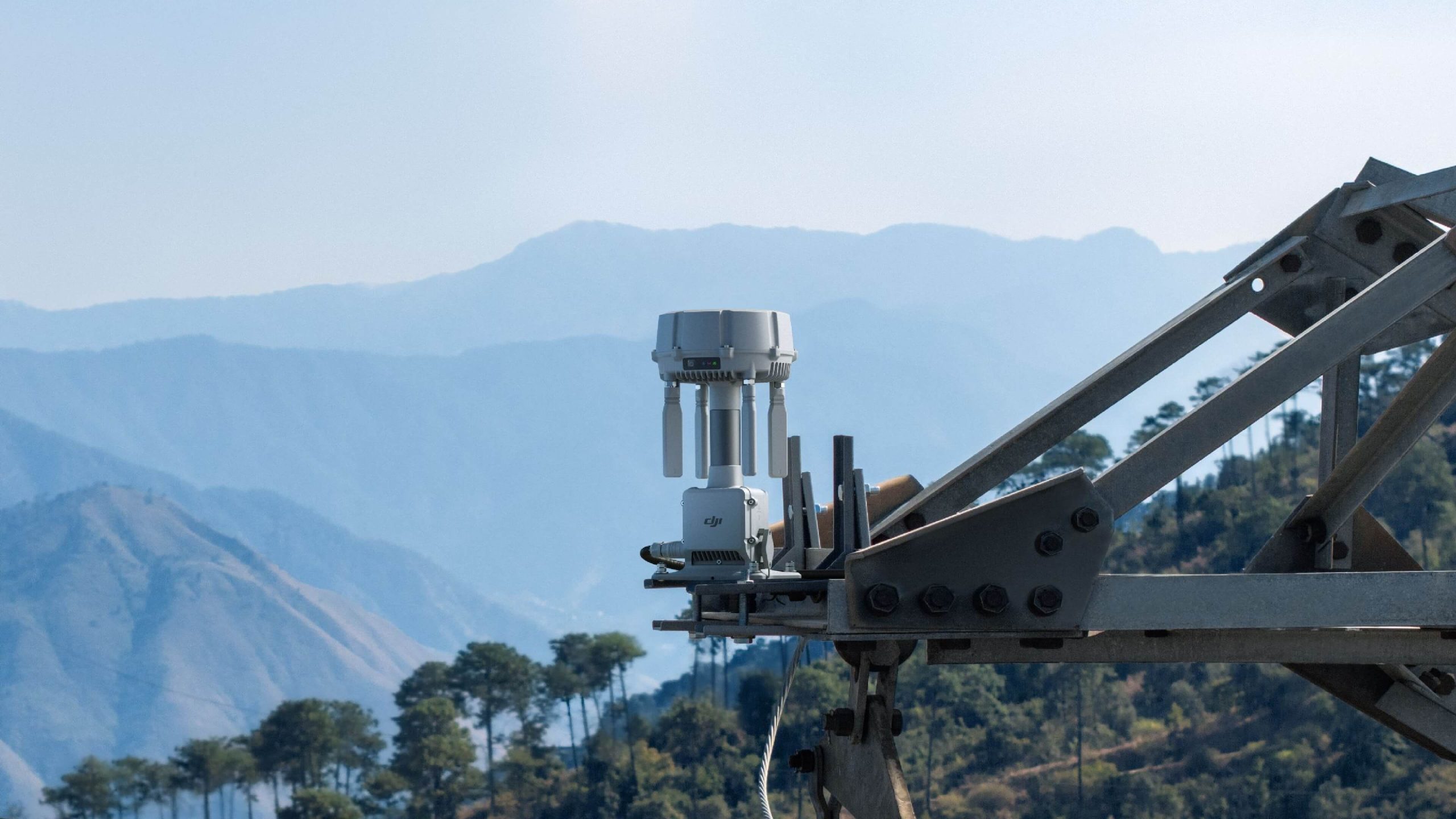
The DJI O4 Ground Station sets an unprecedented benchmark for ultra-long-range enterprise signal transmission, multi-user control flexibility, and heavy-duty field reliability. Built around DJI’s latest O4 HD transmission architecture, this tactical base station acts as a high-power communications anchor for flagship aircraft platforms, allowing teams to maintain crisp, crystal-clear control loops and low-latency data feeds through severe RF interference or complex terrain obstacles. Authorised and supported by Drone Sales UK.
Extended Signal Range Threshold
Multi-Device Network Bridging
Ultra-Bright Command Display
Rugged IP-Sealed Construction
Hot-Swappable Power Array
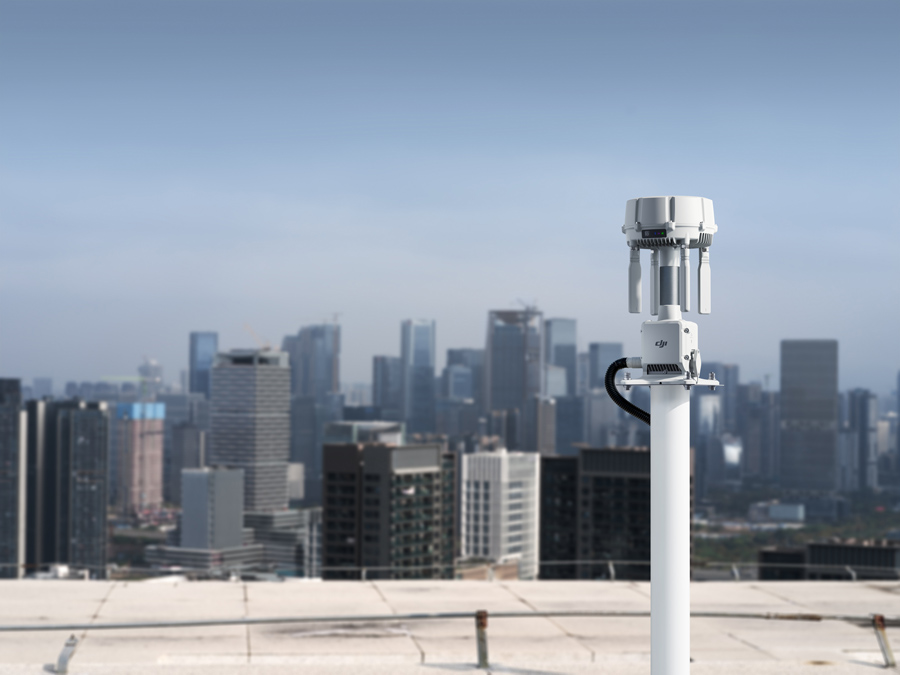
Uncompromising Signal Authority & Link Resilience
When executing high-stakes public safety deployments, infrastructure inspections, or search missions, dense urban congestion and radio frequency saturation can cripple standard link systems. The DJI O4 Ground Station counters these limitations by utilising intelligent multi-band signal switching and high-gain antenna arrays. By locking into the O4 protocol layer, it maintains high-bitrate 1080p/60fps video feeds and millisecond-accurate control responses over extreme standoff distances, cutting through interference that disrupts lesser receiver hubs.
- Adapts in real-time between multiple frequency spectrums to ensure a continuous, uncompromised control path
- Provides a centralised tactical command anchor for multi-agency coordination and complex remote operations
- Eliminates signal blind spots caused by terrain variations or structural blockades in challenging environments

Dynamic Bridging & Advanced Network Integration
The O4 Ground Station isn’t just a remote controller; it acts as an intelligent communications node, giving teams deep flexibility over how mission critical data is routed across the scene.
- Multi-User Split Control: Supports seamless pilot-to-payload or operator-to-commander screen handover links.
- External Stream Out: Features direct high-definition HDMI and ethernet out paths to stream data straight into tactical command vans.
- SDFly / DJI Pilot Interloop: Fully integrated software mapping parameters allow automated waypoint logging and team data sharing.
Ruggedised, All-Weather Physical Build
Critical commercial and security scenarios cannot pause for adverse weather conditions; the O4 Ground Station matches the robust durability of flagship DJI enterprise aircraft.
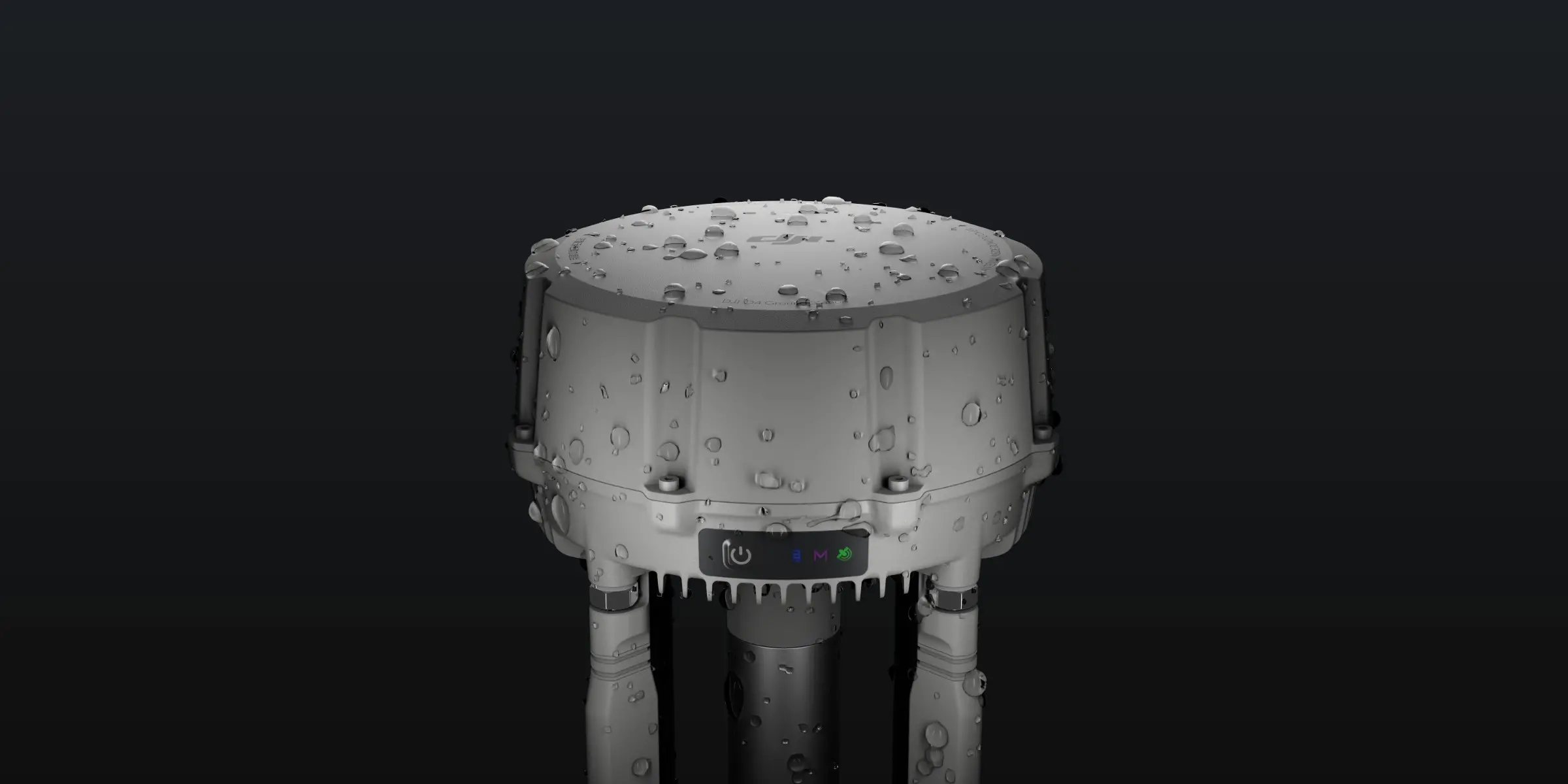
- IP-Rated Weather Proofing: Constructed with heavy-duty seals to protect vital processors from rain, dust, and coastal sand.
- High-Brightness Display Panel: Features a high-nit outdoor display screen for perfectly scannable readability under direct sunlight.
- Thermal Management System: Advanced internal cooling architecture ensures silent, non-throttling runtime during extended summer drops.
Continuous Hot-Swappable Runtime
To support back-to-back aerial flights or prolonged surveillance loops, the O4 Ground Station relies on a secure power delivery layout.
- Dual-Battery Hot Swap: Switch out auxiliary external batteries on the fly without forcing a system reboot or link disruption.
- Direct DC Power Supply: Connect into stationary command power systems, portable generators, or vehicle inverter systems.
- Smart Power Conservation: Regulated processor distribution prioritises core RF link power when reserves drop below safety lines.
Pro Tip: When operating the O4 Ground Station in high RF interference zones (such as close to power lines or communication towers), set the antenna system to direct tracking orientation and select manual channel selection within DJI Pilot 2 to secure the cleanest and most stable data pipe.
Supported Enterprise Airframes & Ecosystem Platforms
The DJI O4 Ground Station integrates natively with current-generation and future O4-enabled enterprise aircraft ecosystems via the standard DJI firmware layer:
| Aircraft Platform / Remote System | Integration Support Type | Quick Link |
|---|---|---|
| DJI Matrice M400 | Full Native O4 System Integration, Extended Range & Advanced Multi-Link Split Control | View M400 Range → |
| DJI Matrice 350 RTK | Supported via optional O4 upgrade modules & specialised enterprise firmware bridges | View M350 RTK → |
| DJI RC Plus (O4 Edition) | Direct master/slave interlinking for split pilot/sensor payload applications | Enquire for Details → |
What is the primary function of the DJI O4 Ground Station?›
The O4 Ground Station serves as a universal video transmission and communication base station. It is built to overcome severe signal barriers, extend transmission ranges, and maintain stable links between enterprise aircraft, remote automated docks, and command centres across urban, mountainous, or off-grid environments.
What is the maximum transmission range of this ground station?›
When paired with flagship enterprise platforms like the DJI Matrice 400, the O4 Ground Station supports an incredible long-range transmission radius of up to 40 km. When deployed in Gateway Mode, it comfortably delivers high-bandwidth video and control links across a 30 km coverage area.
How does the 12-antenna array improve signal reliability?›
The unit incorporates a high-performance RF core coupled with an omnidirectional 12-antenna layout utilising horizontal and vertical polarisation. This allows the ground station to continuously capture high-gain signals regardless of the drone’s spatial orientation, maximizing receiver sensitivity even through dense structural obstructions.
What frequency bands does the system utilise to avoid interference?›
To navigate heavily congested radio environments, the station uses Automatic Multi-band Selection. It actively monitors signal performance and dynamically shifts across sub-2G, 2.4 GHz, 5.2 GHz, and 5.8 GHz frequencies without operator intervention, ensuring a crisp, stutter-free live feed.
What is the difference between Gateway Mode and Relay Mode?›
In Gateway Mode, the station connects directly to DJI FlightHub 2 via Ethernet or a 4G Cellular Dongle, letting pilots remotely control aircraft using a virtual cockpit. In offline or heavily blocked sectors (like deep valleys), Relay Mode inherits D-RTK 3 functionality, allowing the station to be placed on a high point to act as an offline signal booster.
How accurate is the integrated positioning and tracking hardware?›
The ground station features an integrated high-gain RTK module powered by a 5-system, 19-frequency GNSS receiver. It rapidly locks onto satellite signals even within semi-obstructed environments or urban canyons, feeding continuous, centimetre-level positioning data directly to your fleet.
Is the station designed for permanent, unattended outdoor installation?›
Absolutely. It features an IP67 waterproof and dustproof rating, an operational temperature envelope of -40°C to 55°C, and Category C lightning protection. A fan-less passive cooling design combined with an automated software self-recovery mechanism ensures 24/7 maintenance-free operation at remote or elevated sites.
How efficient is the power management system for off-grid sites?›
The O4 Ground Station features an intelligent low-power standby mode. When no aircraft is actively connected, it sleeps and draws only approximately 7 watts of power. This low draw makes it completely optimised for remote, off-grid deployments running on DJI Power solar setups or third-party solar configurations.
DJI O4 Ground Station — Enterprise System Specifications
A high-performance, ruggedised telecommunications and high-precision GNSS positioning hub designed for modern industrial drone fleets and automated dock ecosystems. Operating on the O4 Enterprise Enhanced transmission framework, this IP67/IK07-rated ground station delivers up to 40 km of wireless range, centimeter-level RTK accuracy, and multi-band frequency agility across extreme environmental thresholds.
Centimeter-Level Network RTK
12-Antenna MIMO RF Array
IP67 Waterproof & IK07 Impact Shielding
Internal Heating & -40°C Cold Start
Integrated LiPo Backup Power Supply
High-Precision GNSS Receiver Core & Spatial Accuracy
- Comprehensive Multi-Band GNSS Tracking: Continuously monitors a vast satellite matrix across 5 major constellations and L-Band differential streams:
- GPS: L1C/A, L2C, L5
- BDS (BeiDou): B1I, B2I, B3I, B1C, B2a, B2b
- GALILEO: E1, E5a, E5b, E6
- GLONASS: L1, L2
- QZSS: L1C/A, L2C, L5
- Uncalibrated Single Point Accuracy (RMS): Horizontal variance bounds within 1.5 meters; Vertical tracking accuracy within 3.0 meters.
- Satellite-Based Differential Performance (RMS): Anchors positioning within 30 cm horizontally and 40 cm vertically following a standard 20-minute convergence window.
- Network RTK Calibration Matrix (RMS): Achieves precision fields of 1.0 cm + 1 ppm horizontally and 3.0 cm + 1 ppm vertically when fully converged. Ideal deployment requires an open, unobstructed view and an RTK mountpoint supporting four or more concurrent satellite systems.
O4 Enterprise Enhanced Video Transmission & RF Framework
- Antenna Architecture: Outfitted with an expansive 12-antenna layout consisting of 4 OcuSync 4 Pro external directional antennas and 8 OcuSync 4 Pro internal directional antennas. Uses standard reverse polarity SMA hardware connectors. Transceiver configurations support 2T4R tracking for 2.4G/5.2G/5.8G frequencies and a 2T2R footprint for Sub2G bands.
- Multi-Band EIRP Transmission Power:
- 902–928 MHz: < 30 dBm (IC), < 16 dBm (MIC)
- 1.430–1.444 GHz: < 35 dBm (SRRC)
- 2.400–2.4835 GHz: < 33 dBm (IC), < 20 dBm (CE/SRRC/MIC)
- 5.150–5.250 GHz: < 23 dBm (IC/CE)
- 5.725–5.850 GHz: < 33 dBm (IC), < 14 dBm (CE), < 30 dBm (SRRC)
- Max Unobstructed Transmission Distance (Optimal Outdoor Testing):
- IC Jurisdiction Standards: Up to 40 km linking a Matrice 400 (Relay Mode); 30 km with alternative enterprise aircraft frameworks. Remote Controller / DJI Dock 3 link limits via Relay Mode max out at 3 km (1 km recommended).
- SRRC Jurisdiction Standards: Up to 25 km linking a Matrice 400; 18 km for alternative aircraft; Relay Mode links max out at 3 km.
- CE Jurisdiction Standards: Up to 25 km linking a Matrice 400; 18 km for alternative aircraft; Relay Mode limits max out at 1 km (300 m recommended).
- Real-World Interference Boundaries (IC Standards with Matrice 400):
- Strong Interference (Dense Urban Areas): Ranging approximately from 1.8 to 6 km.
- Medium Interference (Suburban/Parks): Ranging approximately from 6 to 18 km.
- Weak Interference (Open Remote Areas): Ranging approximately from 18 to 40 km.
- Obstructed Transmission Realities: Heavy forest canopy obstruction trims active lines down to a 0.5 to 3 km window. Hard structural urban building block obstruction reduces propagation boundaries to a 0 to 0.5 km operating vector.
Network Ingestion & Power Configuration Parameters
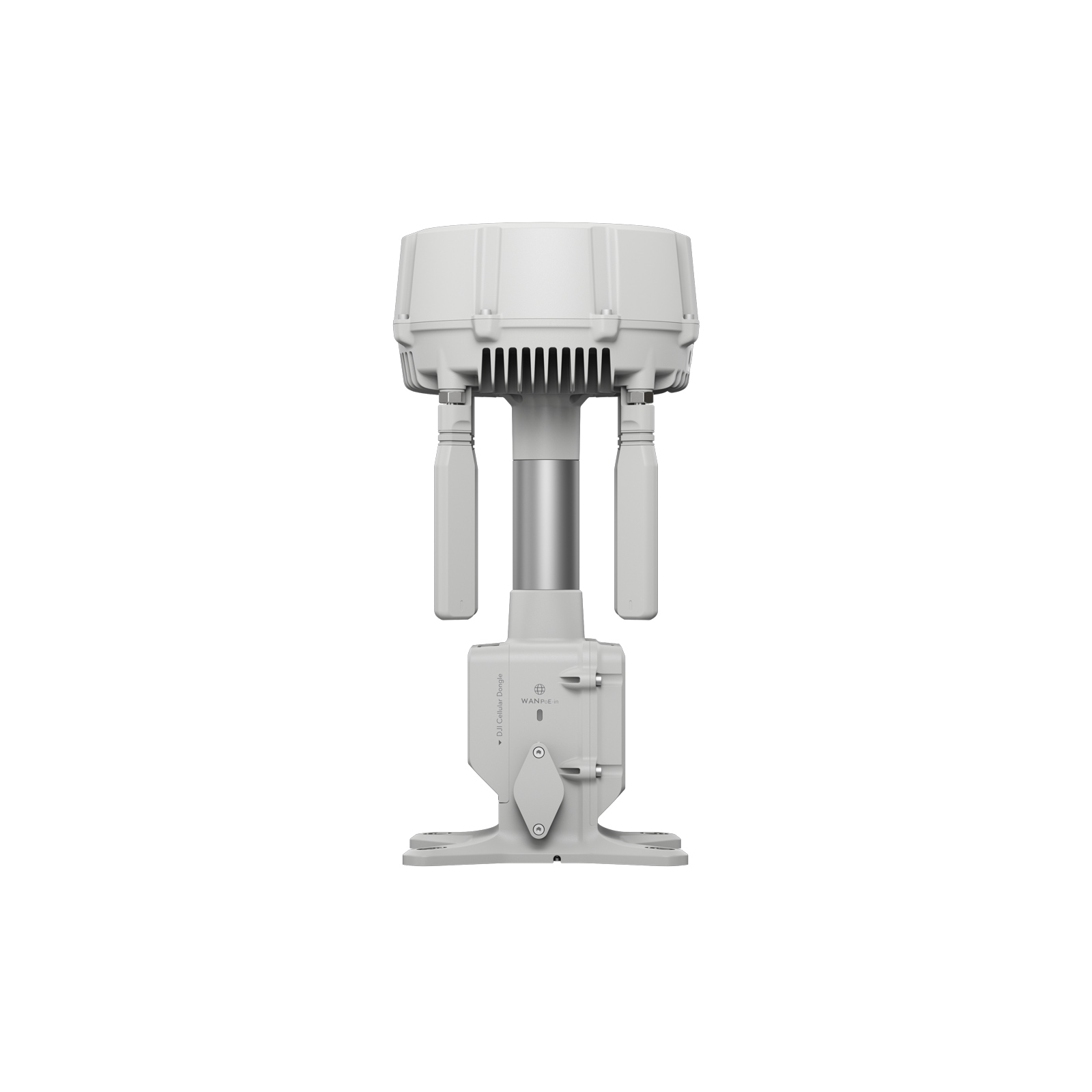
- Network Ingestion Paths: Features an adaptive high-speed hardwired Ethernet port requiring a baseline bandwidth threshold of ≥ 100 Mbps combined with latency caps of ≤ 100 ms to avoid signal dropouts. Mobile cellular backhaul supports 4G access via the DJI Cellular Dongle 2 accessory slot.
- PoE Ingestion & Cabling Constraints: Relies on PoE-in infrastructure across its WAN and LAN ports. Requires a Cat 6 or higher outdoor-rated, waterproof twisted-pair cable running an outer jacket thickness of 5.5 to 6.5 mm with a maximum total loop run length of 100 meters.
- Operational Power Consumption Metrics:
- Gateway Operation Mode: Max consumption reaches 65 W with heating modules active; drops to 17.1 W typical during clear weather operations, and hits a low-power hibernation state of 7 W.
- Relay Operation Mode: Max consumption matches at 65 W. Typical draws without heating register at 31.7 W when bound to DJI Dock 3 / Matrice 4 systems, and 37.9 W when connected to a Matrice 400 system. Idle draws with no aircraft connected sit between 29.7 W and 30.6 W.
- Supported PoE Power Matrix: Native connection to DJI Dock 3 PoE output ports, or verified third-party PoE equipment matching these standards (Non-standard or Type 1 PoE will generate a solid red warning fault indicator):
- IEEE 802.3bt Type 4 (PoE++): 52 V to 57 V output delivering a maximum of 99.9 W per port.
- IEEE 802.3bt Type 3 (PoE++): 50 V to 57 V output delivering a maximum of 60 W per port.
- IEEE 802.3at Type 2 (PoE+): 50 V to 57 V output delivering a maximum of 30 W per port (Restricted strictly to Gateway Mode operations).
Backup LiPo Battery Dynamics & Preservation Loops
- Integrated Battery Specifications: High-density Lithium Polymer (LiPo) cells pushing a 3250 mAh capacity rated at 23.4 Wh of total standby energy.
- PoE Battery Preservation Automation: Active by default when standard PoE lines are live. To extend long-term cell lifespan, the device maintains internal backup voltage safely between 7.0 V and 7.4 V, deliberately refusing to charge cells to 100% capacity. If a cell exceeding 7.5 V is inserted, the ground station automatically discharges it down to this preservation window.
- Sudden Power Interruption Standby Lifespan (Preservation State): Instantly bridges outages to keep communication loops alive for roughly 45 minutes under Gateway Mode, and roughly 30 minutes under Relay Mode configurations.
- External PD Charging Performance: Supports 9V or 12V Power Delivery protocols. Pre-deployment charging utilising a 6S/65W PD charger brings cells to 100% capacity in approximately 2.5 hours, expanding cold un-powered Gateway operation limits up to 2 hours of runtime. 5V legacy charging is strictly locked to “powered off” device states. Backup cells will only accept a charge when internal temperatures sit between 0° and 55° C.
Physical Ruggedisation, Thermal Control, & Ecosystem Topology
- Mechanical Dimensions & Mass: Total industrial chassis dimensions clock in at 170×170×352 mm. The dry hardware mass is rated at 2.68 kg. Mounting protocols accept M6 bolts at a 60 mm center spacing or φ6×70 mm industrial expansion anchors.
- Environmental Resilience & Surge Suppression: Fully weather-sealed to IP67 standards (demands proper utilisation of corrugated cable tubing plugs and secure tightening of unused WAN/LAN port screws). Impact rating certified up to an IK07 kinetic threshold. Integrated RJ45 Ethernet surge protection circuits absorb up to 10kA of total discharge current, meeting EN/IEC 61643-21 Category C specifications.
- Thermal Operating Windows: Safe operational ranges correspond to power source limitations: Type 4 power runs from -40° to 55° C; Type 3 runs from -30° to 55° C; Type 2 functions down to -20° C. The 55° C thermal limit actively takes extreme solar radiation loads into account. Max operational altitude capability peaks at a 6000-meter ceiling.
- Smart Auto Wake-Up & Cold-Weather Internal Pre-Heating: Incorporates automatic PoE wake-up loops upon power restoration or link insertion. In freezing field scenarios ranging down from -20° to -40° C, the chassis activates a cold-weather heating startup routing, utilising Type 3 or higher PoE supplies (≥ 60 W) to safely warm internal processors before initiation.
- Software & Extended Cloud Integration API: Interfaced on the ground via the DJI Enterprise initialisation application framework for Android devices. Seamlessly maps automated operations into DJI FlightHub 2, FlightHub 2 On-Premises, FlightHub Sync, and the native DJI Cloud API.
- Open Ecosystem Hardware Extensions: Fully supports the ingestion of up to four concurrent 1080p H.264 video security lines using ONVIF or GB/T 28181 surveillance protocols. Third-party payload hardware development is facilitated through native ESDK 2.0 integration blocks.
* All listed range performance curves and multi-band tracking metrics represent maximum unhindered mathematical performance lines verified in clear, optimal outdoor testing conditions. Local regulatory limits, regional transmission law parameters, physical terrain masking, atmospheric ionospheric activity, and ground earthing array reliability will impact real-world deployments. Always cross-reference the live application return-to-home parameters during automated long-range flights.
Downloads

Windows Version v2.1.20
Mac Version v2.1.20
Related Products
-


DJI M400 Inspection & Infrastructure
£21,210.00 Buy Now -
Manifold 3
£1,160.00 Buy Now -
DJI AP100 Parachute
£1,010.00 Buy Now -
DJI Zenmuse V1
£810.00 Buy Now -
Zenmuse X7 DJI DL 24mm
£1,299.00 Buy Now -
Zenmuse X7 DJI DL 50mm
£1,199.00 Buy Now -
TB100 Flight Battery
£1,320.00 Buy Now -
DJI BS100 Intelligent Battery Station
£1,150.00 Buy Now -
DJI Zenmuse L3
£13,150.00 Buy Now -


DJI M400 Surveying & Mapping Pro
£33,407.00 Buy Now