


Agricultural Drones at Cereals 2026: 5 Things We Learned at the UK’s Largest Arable Farming Event
Cereals 2026 was another fantastic event for the UK agricultural industry, bringing together farmers, agronomists, machinery manufacturers and technology providers from across the country.
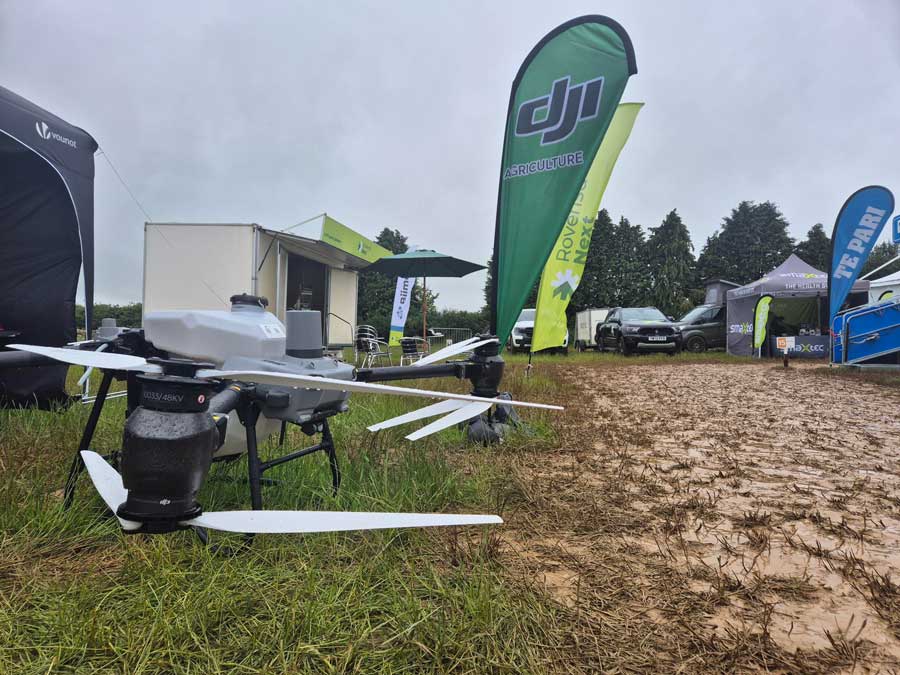
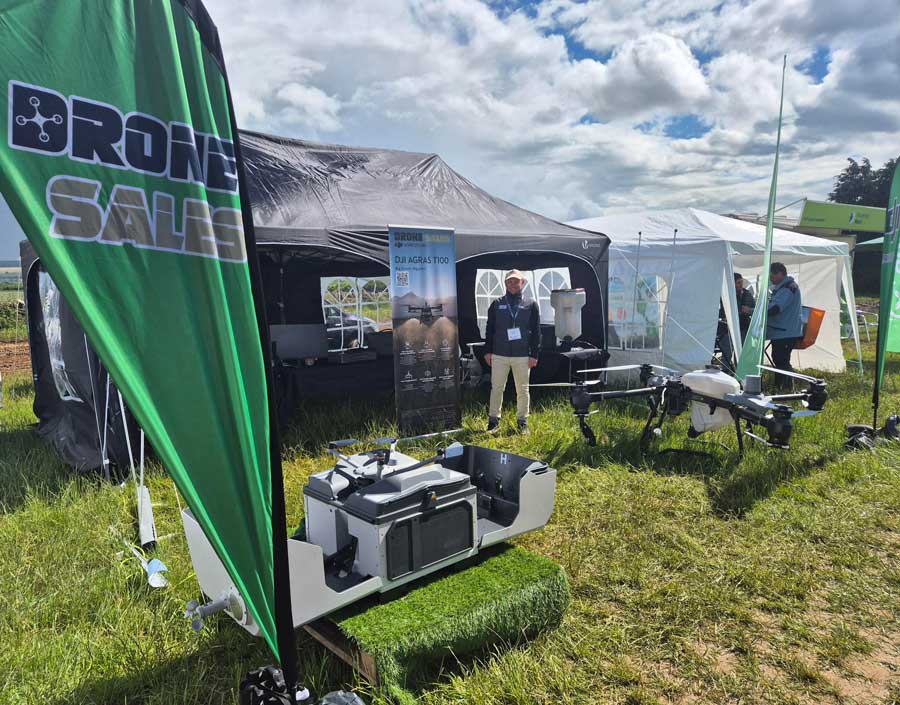
The team from Drone Sales UK attended with a range of agricultural drone solutions, including the DJI Agras T25, DJI Agras T100 and the DJI Dock 3 with Matrice 4TD. Despite some exceptionally muddy conditions underfoot, attendance remained strong and conversations around agricultural technology were busier than ever.
Over the course of the event, we spoke with farmers, contractors and estate managers about everything from drone spraying and spreading through to autonomous farm monitoring and AI-powered crop analysis.
Here are our five biggest takeaways from Cereals 2026.
1. Farmers Are Interested in Agricultural Drones, But ROI Still Comes First
One thing became clear very quickly. Most farmers are no longer asking whether agricultural drones work. Instead, they want to know how quickly they can pay for themselves.
- How many acres can it cover?
- How much can I save on labour?
- Can it reduce machinery costs?
- What is the return on investment?
- Should I buy a drone or use a contractor?
These were among the most common questions we received throughout the show.
Whilst the technology itself is impressive, farmers understandably need to justify every investment. Whether it is reducing soil compaction, improving application timing, reaching inaccessible areas or increasing operational efficiency, the conversation ultimately comes back to financial return.
To help answer these questions, we have developed an Agricultural Drone Payback Calculator, which allows farmers and contractors to estimate how quickly a drone could generate a return based on their own operation.
For many visitors, the numbers were more compelling than they expected.
2. The Biggest Limitation Is Not the Drone, It Is the Regulations
A common misconception is that agricultural drones are somehow limited by the technology itself.
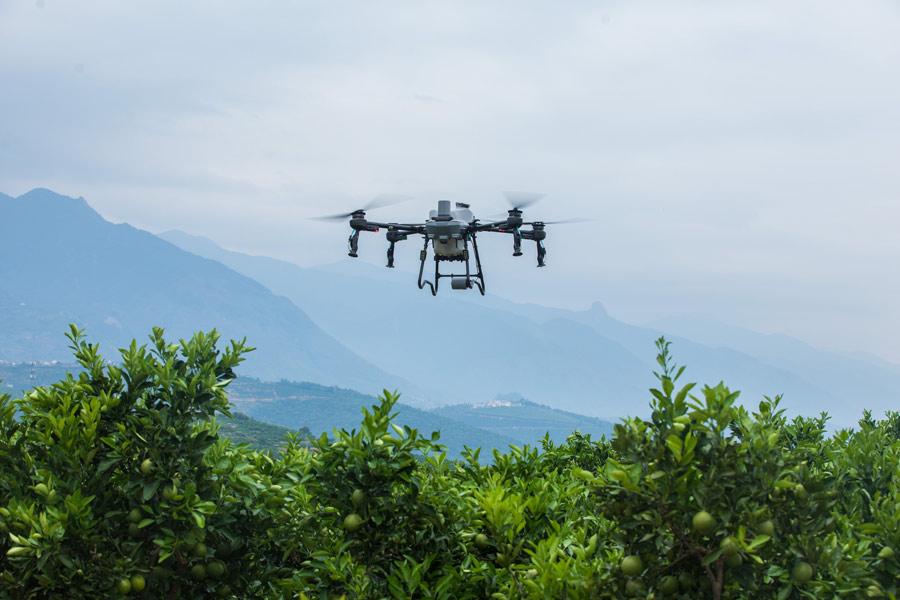
In reality, modern agricultural drones such as the DJI Agras series are capable of applying products with remarkable precision and efficiency. Application rates, swath widths, terrain following and automated flight planning have advanced significantly over recent years.
The biggest challenge currently facing wider adoption in the UK is regulatory approval surrounding what products can legally be applied aerially.
Several visitors were surprised to learn that the restrictions are often not related to the drone’s capability, but rather whether a product is approved for aerial application under current regulations.
There is growing interest within the industry to see further progress in this area. Products such as slug pellets were frequently mentioned during conversations at the event, with many farmers recognising the potential benefits drone application could offer in certain situations if future approvals become available.
The good news is that operational approvals, training and competency requirements are already achievable. Whilst they require planning and time to complete, these are not considered major barriers by most operators entering the market.
3. Many Farmers Are Still Discovering What Agricultural Drones Can Actually Do
One of the most rewarding parts of exhibiting at Cereals 2026 was seeing the reaction from farmers who had never experienced a modern agricultural drone up close.
Many visitors were genuinely surprised by:
- The payload capacities available today
- The size of the spray swath
- The speed of operation
- Automated mission planning
- Precision terrain following
- RTK accuracy
- Variable application rates
- The ability to create and repeat fully automated missions
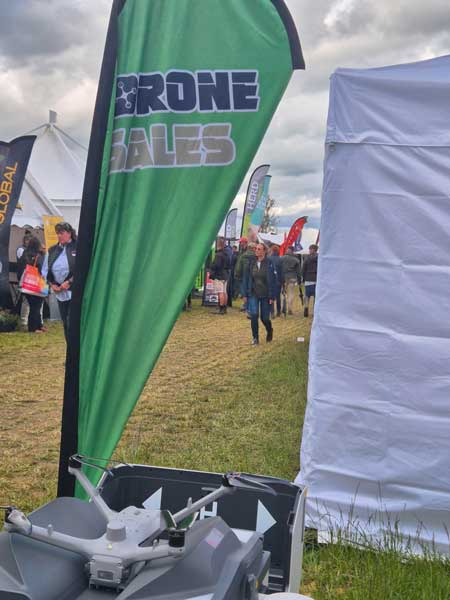
There is still a perception among some people that agricultural drones are simply scaled-up hobby drones. The reality is very different.
Modern agricultural drones are highly specialised pieces of equipment designed specifically for commercial farming applications. From precision spraying and spreading to mapping and crop monitoring, the capabilities now available are far beyond what many visitors expected.
Beyond spraying and spreading, there was also significant interest in the DJI Dock 3 and Matrice 4TD platform that we brought to the event.
Many farmers were surprised to learn that automated drone operations can be used for routine livestock counting, crop inspections, fence and boundary checks, perimeter security monitoring, thermal searches for livestock, monitoring remote areas of large estates and future integration with farm security and alarm systems.
For many visitors, this was their first glimpse into what autonomous farm monitoring may look like over the coming years.
4. Data and AI Could Become Even More Valuable Than Spraying
Whilst spraying and spreading naturally attract much of the attention, one of the most interesting technologies we encountered at Cereals 2026 was the growing use of AI-powered crop analysis.
We spent time learning more about CultiWise, a platform that combines satellite imagery, multispectral drone data and artificial intelligence to help farmers make better decisions.
Rather than simply collecting imagery, platforms such as CultiWise help transform data into actionable insights by identifying variability across fields and highlighting areas that may require attention.
- Crop health monitoring
- Variable rate applications
- Plant counting
- Early issue detection
- Crop performance analysis
- Prescription map generation
What became increasingly clear throughout the event is that the value of drone technology does not stop once the aircraft lands.
In many cases, the biggest opportunity may be using the data collected to make better agronomic decisions across the entire farm.
5. Precision Agriculture Is Becoming Accessible to Farms of All Sizes
Another encouraging trend we observed was the growing accessibility of agricultural drone technology.
There is no longer a one-size-fits-all solution.
For smaller farms and single-operator contractors, the DJI Agras T25 generated considerable interest thanks to its combination of performance, portability and efficiency.
For larger farms, contractors and businesses looking to maximise productivity, the DJI Agras T100 attracted significant attention due to its increased payload capacity, higher throughput and additional lifting capabilities.
This flexibility means agricultural drones are becoming increasingly viable across a wide range of farm sizes and business models.
Whether the goal is spraying, spreading, mapping, monitoring or improving efficiency, there is now a solution suitable for most operations.
Final Thoughts
Cereals 2026 reinforced what we have been seeing throughout the agricultural sector over the past few years.
Interest in agricultural drones is growing rapidly, but farmers are approaching adoption in a practical and measured way. They want clear returns, proven results and solutions that genuinely improve efficiency.
As one of the UK’s leading suppliers, service centres and training providers for agricultural drones, Drone Sales UK is proud to support farmers and contractors as they explore these new technologies.
Whether you are considering your first agricultural drone or looking to expand an existing operation, our team would be happy to help.
To learn more about DJI Agras agricultural drones, autonomous monitoring solutions or agricultural drone training, get in touch with the team at Drone Sales UK.