


£50 Million Drone Investment
The UK drone industry has received a major boost, and while much of the attention has been on flying taxis and future transport, the announcement could also have a real impact on agriculture and commercial drone operations.
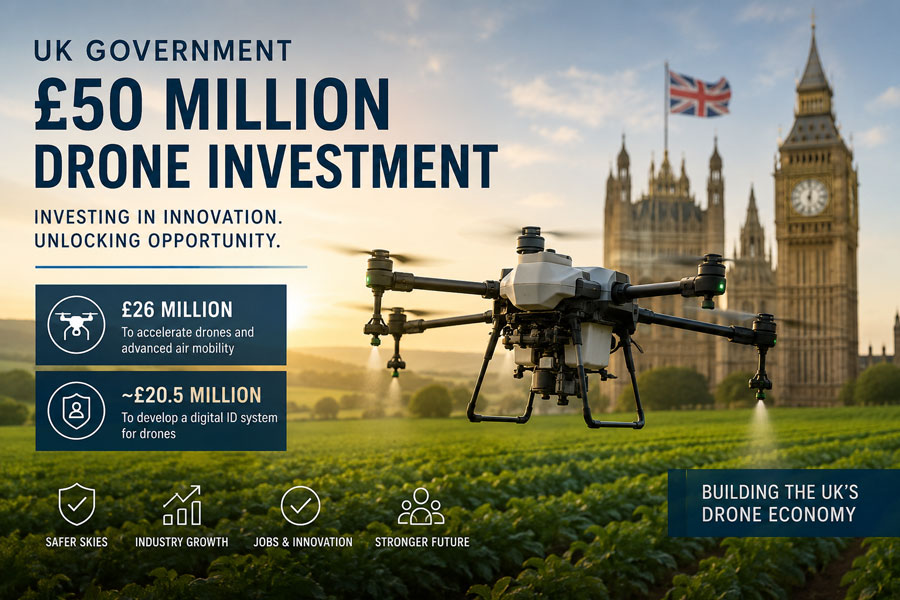
The UK government has announced nearly £50 million in funding to accelerate drone and advanced air mobility technology, while also improving how illegal or unsafe drone use is identified and controlled.
For farmers, contractors and land managers, the most important part of this announcement may not be the futuristic headlines. It is the potential for clearer regulation, faster approvals and a more mature commercial drone industry.
What Has Been Announced?
The funding is being split across two main areas:
- £26 million to help accelerate drones and flying taxis into UK skies
- Approximately £20.5 million to develop a digital identification system for drones, similar in principle to a number plate
The overall aim is to remove barriers to growth, improve safety and make it easier for drone technology to be adopted across different industries.
For agriculture, that could be significant.
Why This Matters for Agricultural Drones
One of the biggest challenges for heavier agricultural drone operations in the UK has been regulation. Platforms used for spraying, spreading, seeding or heavy-lift applications often require more complex permissions than smaller camera drones.
That can create uncertainty for farmers and contractors who are ready to invest, but need confidence that the regulatory pathway is practical and commercially viable.
If this investment helps speed up authorisations and create more consistent operational routes, it could make agricultural drone adoption far more accessible.
The Opportunity for Contractors and Farmers
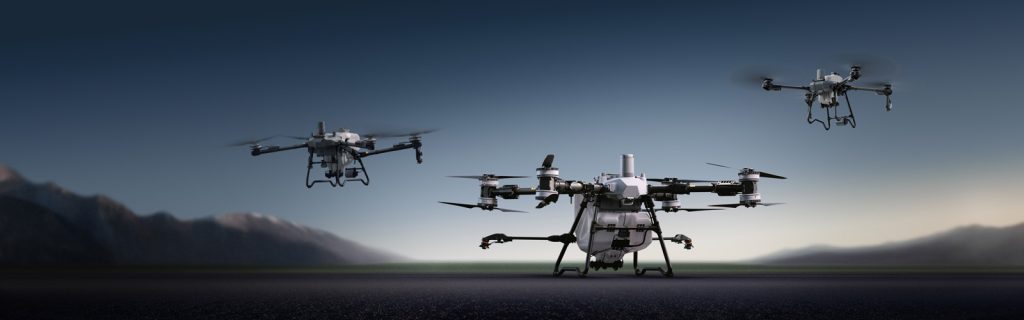
Agricultural drones such as the DJI Agras T50 are designed to make field work more efficient by helping operators cover large areas quickly, apply inputs with precision and reduce reliance on manual labour or heavy machinery.
The benefits are already clear, especially in areas that are difficult to access, sensitive underfoot or unsuitable for traditional equipment.
However, adoption is not just about the drone itself. Businesses also need to understand permissions, training, operating procedures and ongoing compliance.
This latest funding announcement suggests the UK is moving towards a more supportive framework for commercial drone operations, which could give operators more confidence to enter the market or expand their existing services.
Drone ID Could Help Build Trust
The proposed drone identification system is another important part of the announcement.
A digital ID system would make it easier to identify drones in the air and help authorities deal with unsafe or illegal use. For professional operators, this should be seen as a positive step.
It helps separate compliant businesses from irresponsible users and supports wider public confidence in drone technology.
That trust matters, particularly in sectors like agriculture, infrastructure, emergency response and public services where drones may be operating near people, property or critical assets.
A Wider Boost for the UK Drone Industry
Although much of the coverage has focused on drone deliveries, emergency services and flying taxis, improvements to regulation and investment in drone infrastructure should benefit the wider sector.
Agriculture sits right in the middle of that opportunity.
As the industry becomes more established, we are likely to see more specialist operators, more demand for drone-based services and greater confidence from farmers and landowners who are considering the technology for the first time.
From Emerging Technology to Practical Tool
This announcement is another sign that drones are moving away from being seen as experimental technology and towards becoming everyday operational tools.
For UK agriculture, that could mean faster adoption of precision spraying, fertiliser application, seeding, crop monitoring and work in hard-to-reach environments.
It also creates an opportunity for contractors who want to build a scalable service before the market becomes more crowded.
What This Means for Drone Sales Customers
At Drone Sales, we see this as a positive signal for the future of commercial and agricultural drone operations in the UK.
With investment flowing into the sector and regulation continuing to evolve, now is a good time for businesses to start exploring how agricultural drones could fit into their operations.
Whether you are looking at your first agricultural drone or planning to expand an existing service, it is important to choose the right platform and understand the requirements around safe and compliant operation.
We are already working with contractors and organisations preparing for this shift, helping them look at equipment options, use cases and the wider regulatory picture.
Final Thoughts
This £50 million investment is not just about futuristic transport. It is about unlocking the wider drone economy in the UK.
For agriculture, the potential benefits are clear: faster authorisations, lower barriers to entry and a more mature, trusted industry.
For those ready to move early, it could create a strong opportunity.