 Skip to content


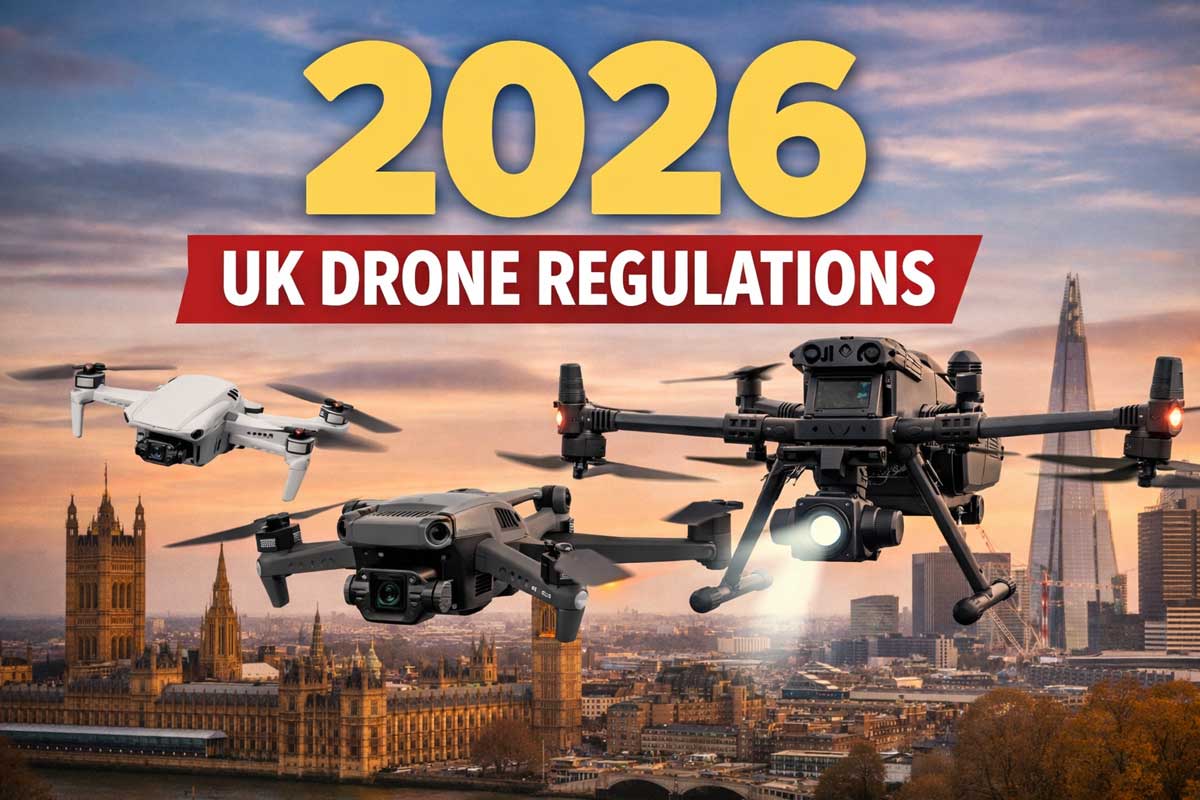
UK Drone Regulations 2026 – What’s Changing From 1 January?
From 1 January 2026, new UK drone regulations come into force that affect almost every drone pilot — from beginners flying Mini drones to professionals carrying out inspections in towns and cities.
This guide explains the new 2026 rules only, what they mean in practice, and which drones are suitable for different types of flying.
Flyer ID & Operator ID – 2026 Rules Explained
From 2026, the threshold for regulation drops significantly. If your drone weighs 100g or more, you are now within the UK regulatory framework.
| Drone Type | Flyer ID | Operator ID |
|---|---|---|
| Under 100g, no camera | Not required | Not required |
| 100g+ without camera | Required | Not required |
| 100g+ with camera | Required | Required |
Most consumer and professional drones fall into the 100g+ with camera category, meaning both IDs are required from 2026.
Which Drones Make Sense Under the 2026 Rules?
Beginner & Lightweight Flying
For pilots who want the least regulatory friction while still flying legally, sub-250g drones remain popular.
Recommended category: DJI Mini 5 Series

Even though Mini drones are under 250g, from 2026 you still need:
- A Flyer ID
- An Operator ID (because they carry a camera)
Higher-Performance Consumer Drones (Urban Flying)
For photography, surveying, and more demanding flying, larger consumer drones offer better stability, cameras, and wind resistance.
Recommended category: DJI Mavic 4 Pro
Under the 2026 rules, these drones typically require:
| Flyer ID | Yes |
| Operator ID | Yes |
| A2 CofC | Strongly recommended for town flying |
Professional & Inspection Work
For inspections, surveying, public safety, and enterprise work, larger platforms are often essential.
Recommended category: DJI Matrice 4 Series

These operations almost always require:
- Flyer ID
- Operator ID
- A2 CofC or Specific Category authorisation
- Risk assessment and insurance
FPV Flying in 2026 – Avata 2 Rules
FPV drones fall under the same 2026 ID rules, but with additional operational requirements.
FPV pilots must use a competent observer (spotter) who maintains unaided visual line of sight with the aircraft at all times.
FPV option: DJI Avata 2

- Flyer ID required (100g+)
- Operator ID required (camera)
- Spotter required for FPV
- No flying over crowds
Flying at Night – 2026 Rules
Night flying is still permitted under UK regulations, but extra precautions are required.
- Drone must be clearly visible
- Use appropriate lighting
- Maintain orientation awareness
- Operate conservatively in populated areas

Summary – What 2026 Means for UK Pilots
| Pilot Type | What You’ll Need |
|---|---|
| Beginner / Hobbyist | Flyer ID + Operator ID |
| Urban photography | Flyer ID + Operator ID + A2 CofC |
| Inspection / Enterprise | Full compliance + authorisation |
The 2026 regulations bring greater accountability — but with the right drone and the right qualifications, flying in the UK remains accessible, safe, and highly capable.
Which Drone Should I Buy Under the UK 2026 Drone Regulations?
One of the most common searches we see is: “Which drone should I buy under the new UK drone laws?”
The right choice depends on how and where you plan to fly, and how much regulatory complexity you’re comfortable with.
| Your Use Case | Recommended Drone | Why It Works Under 2026 Rules |
|---|---|---|
| First drone / hobby flying / travel | DJI Mini 5 Series | Lightweight, easy to fly, ideal for learning the UK drone rules. Requires Flyer ID and Operator ID from 2026 due to onboard camera. |
| Photography, videography, content creation | DJI Mavic 4 Pro | Higher performance camera and stability. Best paired with an A2 CofC for flying legally in towns and cities. |
| Roof inspections, surveying, professional work | DJI Matrice 4 Series | Enterprise-grade sensors and reliability. Designed for compliant inspection work under UK CAA regulations. |
| FPV flying & immersive flight | DJI Avata 2 | FPV-capable drone that must be flown with a spotter under UK FPV rules. Flyer ID and Operator ID required from 2026. |
If you’re unsure, a good rule of thumb under the UK drone regulations 2026 is:
- Mini drones = easiest entry point
- Mavic-class drones = best balance of capability and regulation
- Enterprise drones = professional results with higher compliance
UK Drone Regulations 2026 – Key Takeaways
- Flyer ID required for drones 100g+
- Operator ID required for drones with cameras
- A2 CofC strongly recommended for urban and inspection flying
- FPV drones require a competent spotter
- Night flying is permitted with correct lighting and planning
Understanding the new UK drone laws for 2026 ensures you stay compliant, insured, and confident — whether you’re flying for fun or for work.